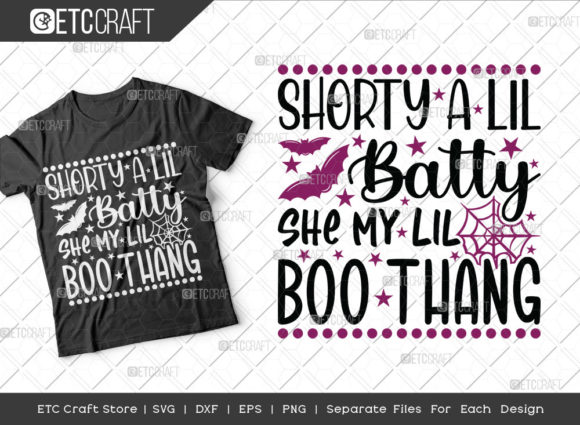
Shorty a Lil Batty She My Lil Boo Thang
As a designer who spends more time looking at stitch density and thread tension than scrolling through endless marketplaces, I approach every new embroidery file with a healthy dose of skepticism. The digital asset space is flooded with generic clip art that looks fine on a screen but falls apart when pushed through an embroidery machine. However, the design titled Shorty a Lil Batty She My Lil Boo Thang caught my eye not just for its trendy phrasing, but for its potential as a viable commercial asset. This review breaks down how this Crafts and Graphics product translates from a digital vector to a tangible, stitched reality.
First Impressions: Mood and Visual Personality
The moment you load the design into your digitizing software, the personality jumps out. The phrase "Shorty a Lil Batty She My Lil Boo Thang" is inherently playful, youthful, and rooted in modern slang. It screams casual confidence. Visually, the layout appears to prioritize readability over intricate detail, which is a smart move for text-heavy designs. In my experience, complex fonts often turn into mush during high-speed stitching, but this design seems to lean into bold, clear shapes.
The mood is undeniably festive yet affectionate. It sits comfortably in the intersection of Halloween cheer and romantic humor. For a boutique owner or an Etsy seller, this duality is gold. It allows you to market the item not just as a spooky holiday decoration, but as a fun gift for couples, best friends, or even pet owners (if adapted). The visual weight of the text suggests it will hold up well on larger surface areas, creating a statement piece rather than a subtle accent.
Real-World Application: Where Does It Shine?
I recently tested similar text-based assets on various substrates to see where they fit best. Here is how Shorty a Lil Batty She My Lil Boo Thang performs in real-life scenarios:
- Custom Apparel and Sweatshirts: This is the sweet spot. A cropped hoodie or a oversized sweatshirt provides enough flat fabric area for the design to breathe. The contrast between a dark heather gray sweatshirt and bright white or neon orange thread would make the text pop. It feels like a natural fit for custom apparel lines targeting Gen Z or millennial demographics.
- Tote Bag Design: Canvas totes are a staple for craft fairs. Placing this centered on a heavy-duty canvas bag gives it a streetwear vibe. The durability of the canvas supports the stitch density without puckering, ensuring the finished product survives repeated washing.
- Holiday Embroidery and Gifts: Given the "Batty" theme, this is perfect for October. Imagine a set of matching kitchen towels or tea towels featuring this quote. It adds a touch of humor to home decor, making it a great impulse buy for shoppers looking for unique personalized gifts.
- Baby Embroidery: While the slang is adult-leaning, the sentiment "My Lil Boo" works for parents too. On a soft muslin onesie or a baby blanket, using softer pastel threads can soften the edge of the phrase, turning it into a cute, modern nursery item.
Technical Considerations and Stitch Performance
Not all designs translate equally well to thread. When evaluating Shorty a Lil Batty She My Lil Boo Thang, several technical factors come into play. First, look at the stitch density. Text-heavy designs often suffer from under-stitching, leading to a sparse, see-through appearance. If the fill stitch is too light, the background fabric might show through, ruining the clean look. Conversely, if it is too dense, the fabric may pucker, especially on lightweight materials.
The use of satin stitch for outlines or lettering edges is critical here. Clean satin stitches give a professional, polished finish that elevates the perceived value of the item. If the corners of the letters are rounded or poorly executed, the design will look amateurish. I recommend inspecting the vector paths in your software to ensure there are no overlapping nodes that could cause erratic needle movement.
Another key factor is the choice of thread colors. The design’s success relies heavily on contrast. On dark fabrics, you need high-contrast threads—think bright yellows, whites, or metallics against black or navy. On light fabrics, darker threads provide better definition. Testing these combinations in a printable mockup before cutting fabric can save you hours of re-threading and troubleshooting.
Where to Use Caution
While versatile, this design has limitations. Avoid placing it on highly textured fabrics like bouclé or thick wools, as the needle may struggle to penetrate evenly, leading to skipped stitches. Similarly, stretchy knits require careful stabilizer selection; without adequate support, the hoop marks can be permanent, and the design may distort as the fabric stretches.
Small hoop sizes are also risky. If the design is scaled down too much, the individual letters may merge, becoming illegible. Always check the minimum recommended hoop size in your software. Additionally, be mindful of curved surfaces like baseball caps. While possible, the curvature can distort straight lines, so testing on a cap frame is essential before committing to a bulk order.
Impact on Brand and Customer Trust
In the world of craft business and Etsy seller operations, presentation is everything. A well-executed embroidery project signals quality and attention to detail. Using a design like Shorty a Lil Batty She My Lil Boo Thang shows that you are attuned to current trends and cultural moments. Customers are more likely to trust a brand that offers timely, relevant, and aesthetically pleasing products.
Furthermore, the versatility of this design allows for cohesive branding. You can use it across multiple product lines—from apparel decorators selling t-shirts to makers creating embroidered patches for denim jackets. Consistency in style helps build a recognizable brand identity. When customers see the same playful, high-quality aesthetic across different items, it reinforces their confidence in your craftsmanship.
Practical Designer Notes for Success
Before you start producing, follow these practical steps to ensure the best outcome:
- Test on Scrap Fabric: Never go straight to the final product. Run the design on scrap pieces of your intended fabric to check for tension issues, color bleeding, or puckering.
- Check Stabilizer Compatibility: Use the correct type of stabilizer (cut-away for knits, tear-away for wovens) to prevent distortion. This is crucial for maintaining the integrity of the machine embroidery design.
- Review Stitch Density: Zoom in on the digitization. Are there any areas where the stitch direction changes abruptly? Smooth transitions look more professional.
- Confirm Licensing: Since this is a digital asset, verify the license terms. Ensure you have the right to sell finished items made from the design, especially if you are operating a commercial embroidery business.
- Inspect Small Details: Look closely at any decorative elements or small lettering. These are the first places to fail if the machine is not calibrated correctly.
Ultimately, Shorty a Lil Batty She My Lil Boo Thang is a strong candidate for anyone looking to add a touch of humor and trendiness to their inventory. It balances visual appeal with practical stitching requirements, making it a solid addition to your library of design assets. Just remember: good digitization and proper execution are what separate a hobbyist project from a professional handmade product. Take the time to test, refine, and present it well, and you will likely see positive engagement from your buyers.